



How does the type of down filling a feather velvet quilt affect its warmth and breathability?
Release Time : 2026-02-10
The warmth and breathability of a feather velvet quilt are closely related to the type of down it uses. The type of down not only determines the size, loft, and fiber structure of the down clusters, but also directly affects the amount of air trapped and circulated, thus influencing the overall performance of the quilt. Different types of down, due to differences in their growth environment, biological characteristics, and processing techniques, exhibit significant differences in warmth and breathability.
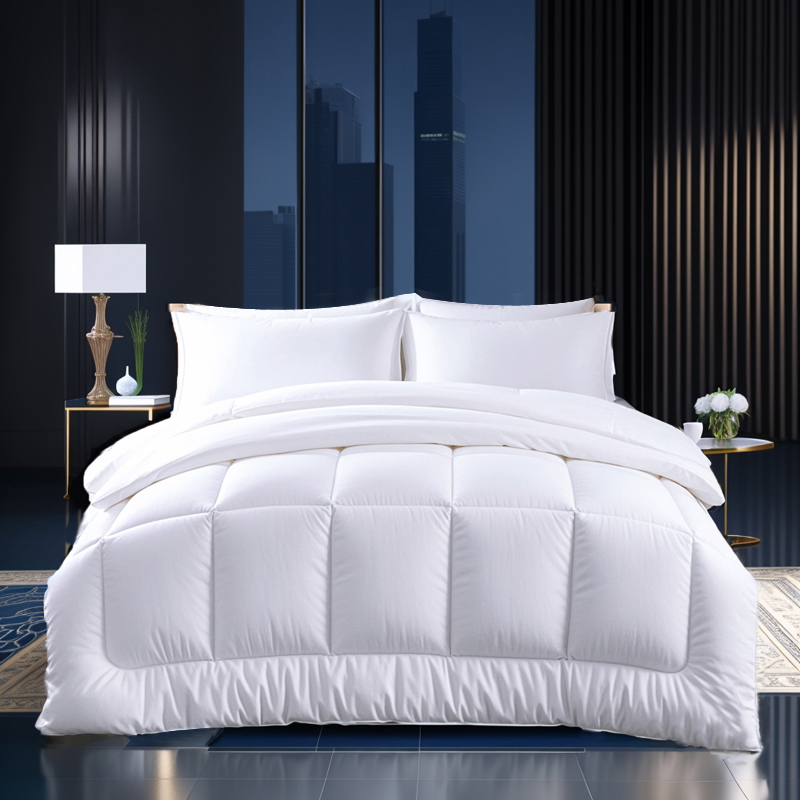
Goose down, with its long growth cycle, large clusters, and small quills, is the best warming filling for feather velvet quilts. The three-dimensional triangular skeletal structure of goose down can trap a large amount of air, and since air is a poor conductor of heat, it effectively prevents the exchange of cold air from the outside with internal heat. This structure allows goose down quilts to maintain warmth in cold environments while remaining lightweight and comfortable. In contrast, duck down has smaller clusters and coarser quills, trapping relatively less air. While its warmth is good, it is slightly inferior to goose down. Furthermore, duck down has a higher oil content due to the omnivorous diet of ducks, and if not thoroughly cleaned, it may retain an odor, affecting the user experience. The loft of down is a key factor affecting warmth, and this loft is directly related to the type of down. Goose down generally has a higher loft than duck down because its down fibers are longer and have more branches, forming a denser air layer. This structure not only improves warmth but also makes the comforter lighter, facilitating turning over and adjusting sleeping positions. While the loft of duck down can be improved through processing, it is limited by the size of the down clusters and cannot reach the level of goose down. Therefore, with the same fill power, goose down comforters are generally warmer.
Breathability is another important property of feather velvet quilts, closely related to the type of down and its fiber structure. Goose down has larger fiber gaps, creating excellent air circulation channels that allow moisture and heat generated by the body to escape quickly, keeping the bedding dry and comfortable. This breathability helps prevent stuffiness and dampness, reduces the growth of bacteria and mites, and improves sleep quality. Duck down has relatively smaller fiber gaps and slightly lower breathability, but with proper processing, it can still meet daily needs. If duck down is not thoroughly cleaned or is overfilled, it may reduce breathability and affect the user experience.
The cleanliness and processing of down also indirectly affect warmth and breathability. High-quality down undergoes multiple washing and dust removal processes to remove impurities and odors, ensuring the fibers are pure and uncontaminated. Goose down, due to its cold growing environment, has cleaner down clusters and is even cleaner after processing, making it less likely to cause allergic reactions. If duck down is not thoroughly cleaned, it may retain oils and impurities, affecting the fiber's fluffiness and breathability, and even producing odors. Therefore, choosing down varieties that have undergone rigorous cleaning is crucial for improving the performance of a comforter.
The warmth and breathability of a feather velvet quilt are also affected by the fabric and manufacturing process, but the type of filling remains a core factor. High-count, high-density fabrics prevent down leakage, and three-dimensional quilting distributes down evenly, avoiding clumping. These designs all require high-quality down varieties to achieve optimal results. For example, goose down, due to its large clusters and high elasticity, is more likely to combine with the fabric to form independent air chambers, locking in heat and preventing loss. Down, on the other hand, requires higher fill power or special processing to compensate for its lack of loft, but this may sacrifice some breathability and lightness.
The type of down has a decisive impact on the warmth and breathability of a feather velvet quilt. Goose down, with its large down clusters, high loft, and large fiber gaps, is an ideal choice for both warmth and breathability; while duck down, although slightly inferior in performance, offers better value for money and is suitable for users with limited budgets or less demanding warmth requirements. When choosing, it is necessary to comprehensively consider the type of down, cleanliness, processing technology, and fabric design to balance warmth, breathability, and comfort, meeting individual sleep needs.