



How can thick striped fitted sheets be treated to improve wrinkle resistance and maintain a smooth appearance?
Release Time : 2026-01-13
The wrinkle resistance of thick striped fitted sheets is key to maintaining a smooth appearance and enhancing the user experience. This characteristic requires a multi-dimensional approach, encompassing fabric selection, weave optimization, finishing processes, and daily care. The core logic lies in enhancing the elastic recovery of fibers, reducing frictional resistance between yarns, and reinforcing the structure to reduce the probability of deformation caused by external forces, thus allowing the fitted sheet to maintain its crispness over long-term use.
Fabric is the foundation of wrinkle resistance. While pure cotton is skin-friendly and breathable, natural fibers have relatively weak wrinkle resistance. Therefore, thick striped fitted sheets often use high-count cotton yarn or blended fabrics. High-count cotton yarn has finer, longer fibers and a higher weave density, resulting in a tighter fabric structure and increased friction between yarns, making it less prone to slippage under external forces. Blended fabrics (such as cotton and polyester blends) combine the comfort of natural fibers with the elasticity of synthetic fibers. The molecular chain structure of polyester fibers gives it good resilience, compensating for the wrinkle-prone nature of pure cotton, allowing the fitted sheet to recover its flatness more quickly after folding or compression.
The weave directly affects the wrinkle resistance of a fabric. Thick striped fitted sheets typically employ tight weaves such as satin or twill. Satin weave creates a smooth surface through the interlacing of warp and weft yarns, resulting in a tight bond between the yarns and reducing the space for wrinkles. Twill weave enhances the fabric's toughness through its diagonal texture, making it more resistant to stretching and twisting. Furthermore, double-layer structures (such as double-layered gauze or quilted designs) further improve wrinkle resistance by increasing the support between the yarns—when external forces are applied, the double-layer structure disperses pressure, preventing irreversible wrinkles caused by excessive localized stress in a single-layer fabric.
Finishing processes are crucial for improving wrinkle resistance. External fiber treatments (such as wrinkle-resistant finishing) use cross-linking agents to cross-link the voids on the fiber surface with the yarns and even between the original fibers, increasing the fiber's stretch recovery while preventing excessive fiber breakage. This treatment significantly improves the wrinkle resistance of fitted sheets, but care must be taken to control the amount of cross-linking agent used to avoid affecting the fabric's softness. Internal fiber treatments (such as alkali treatment and liquid ammonia finishing) improve the macromolecular aggregation state of the fibers, resulting in better molecular chain orientation, increased fiber smoothness, and enhanced stretch recovery. For example, liquid ammonia finishing can increase the crystallinity of cotton fibers, thereby reducing wrinkles.
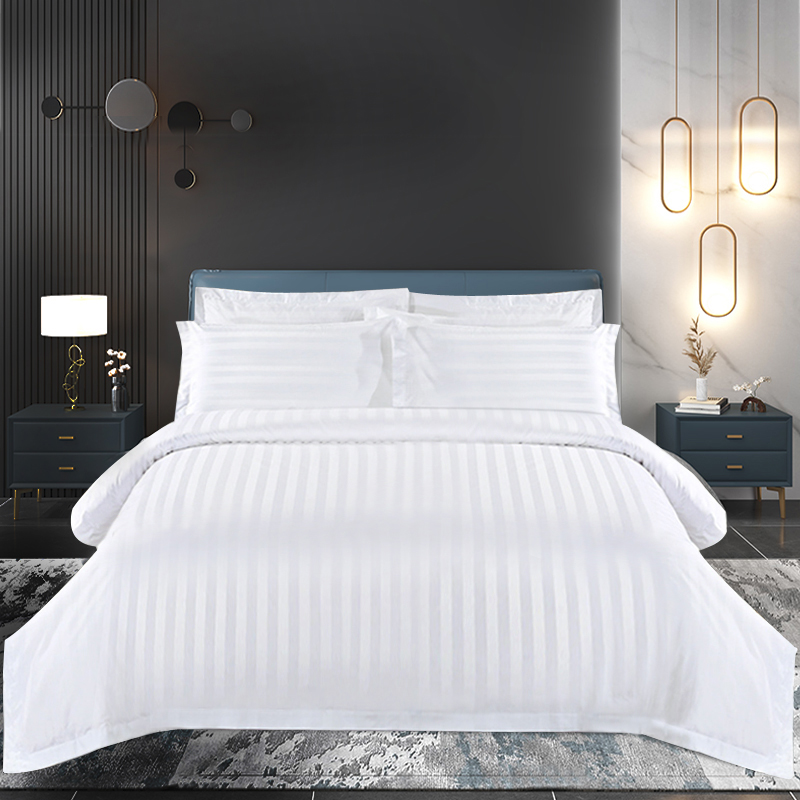
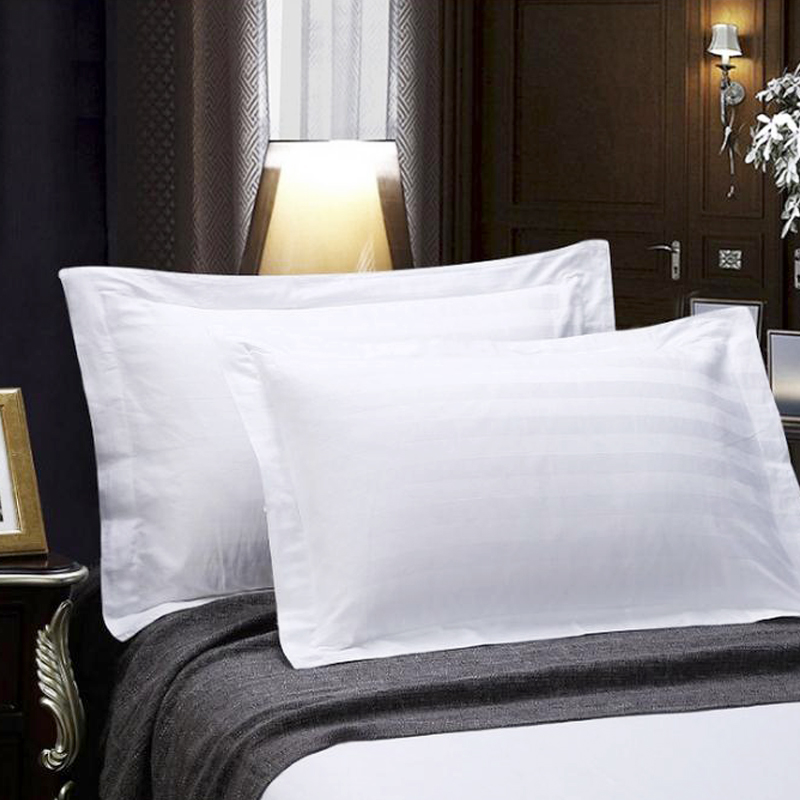
The striped design of thick striped fitted sheets also contributes to wrinkle resistance. The striped pattern, formed by the arrangement of yarns, creates a regular texture that enhances the overall stability of the fabric. When the fitted sheet is subjected to external force, the direction of the stripes guides the stress distribution, preventing excessive local stretching or compression; at the same time, the visual effect of the stripes can, to some extent, conceal minor wrinkles, allowing the fitted sheet to maintain a neat appearance even when slightly wrinkled.
Daily care is crucial for maintaining the wrinkle resistance of fitted sheets. When washing, avoid overloading; leave enough space for the fitted sheet to roll freely to reduce wrinkles caused by friction. Use a gentle wash cycle; high-speed spin drying can damage the fiber structure and increase the likelihood of wrinkles. Cold water washing preserves fiber elasticity better than hot water, reducing shrinkage and deformation. Gently shake the fitted sheet before drying to help smooth out wrinkles. Avoid direct sunlight; air drying in a cool, well-ventilated place is best to prevent high temperatures from hardening the fibers. When making the bed, align the four corners of the fitted sheet with the four corners of the mattress, starting from the head of the bed and gradually smoothing towards the foot. When pulling up the edges of the sheet, maintain moderate tension; too tight will cause it to shift and wrinkle after sleeping, while too loose will not hold in place.
With long-term use, the edges and seams of the thick striped fitted sheet are prone to deformation due to repeated pulling, so reinforced design is needed to improve durability. Widened elastic bands or a three-dimensional edging structure at the four corners enhance grip and prevent shifting and slipping during sleep; high-density edging enhances overall structural stability and reduces wrinkles caused by loose stitching. In addition, the height of the fitted sheet's edge must be adapted to the mattress thickness. Too short, and it will not fit snugly; too long, and it will easily bunch up and wrinkle at the mattress edge.
The wrinkle resistance of a thick striped fitted sheet is the result of the combined effects of fabric, weave, craftsmanship, design, and care. From the selection of high-count cotton yarn to the application of a tight weave, from wrinkle-resistant finishing to gentle daily care, every step aims to reduce wrinkles and enhance resilience. This multi-dimensional collaboration not only makes fitted sheets look neater but also extends their lifespan, making them a bedding choice that combines practicality and aesthetics.